Cold Spring School District logoCold Spring Innovation Plan

Where math comes alive, and kids teach the machines.

In the Robotics Learning Lab, students don't just use technology — they build with it. Every project starts with a grade-level math standard and ends with a robot that dances, delivers, or dodges. AI is the teammate; children are the engineers.

Hands-on & joyfulMath standards alignedHumans stay in charge
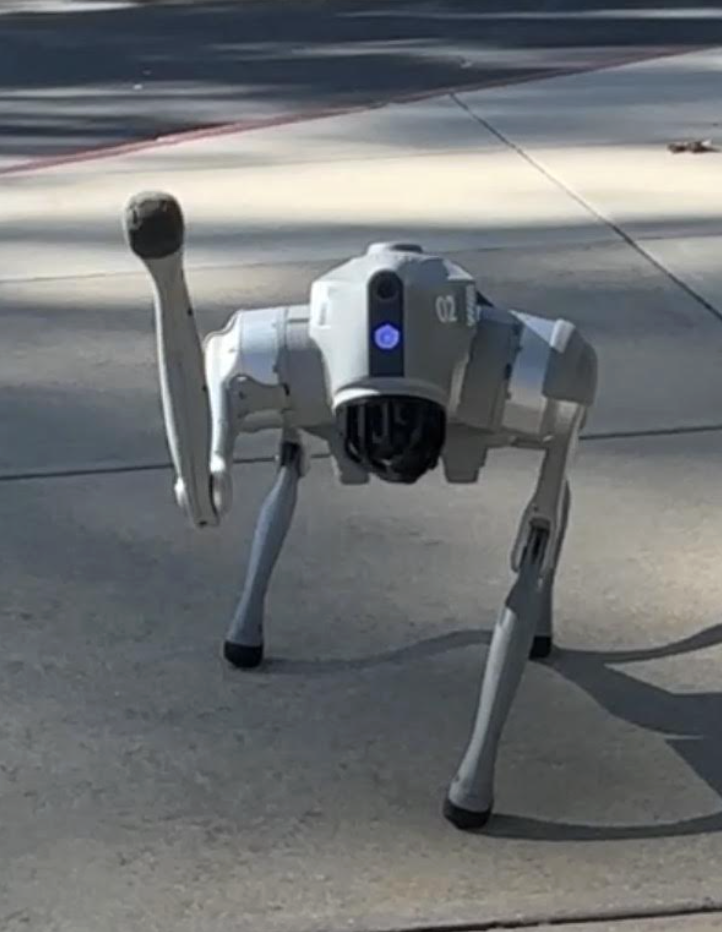
Cold Spring's quadruped robot dog on campus, showing its four legs, camera, and sensors.

Math you can touch

Ratios, angles, rates, and inequalities stop being abstract when a robot has to turn 90° or slow down before a wall.

Failure is friendly

Robots break, code bugs happen — and kids learn that iteration is the point. Teachers coach the process, not just the product.

Everyone belongs here

Teams pair coders with storytellers, planners with tinkerers. Every child finds a role that lets them shine.

The Four Core Projects

Four real-world missions.

Each project pairs a robotics tech component with a student competency and a grade-level math standard.

Block Coding

Grades TK–2

Ozobots & Dash Bots

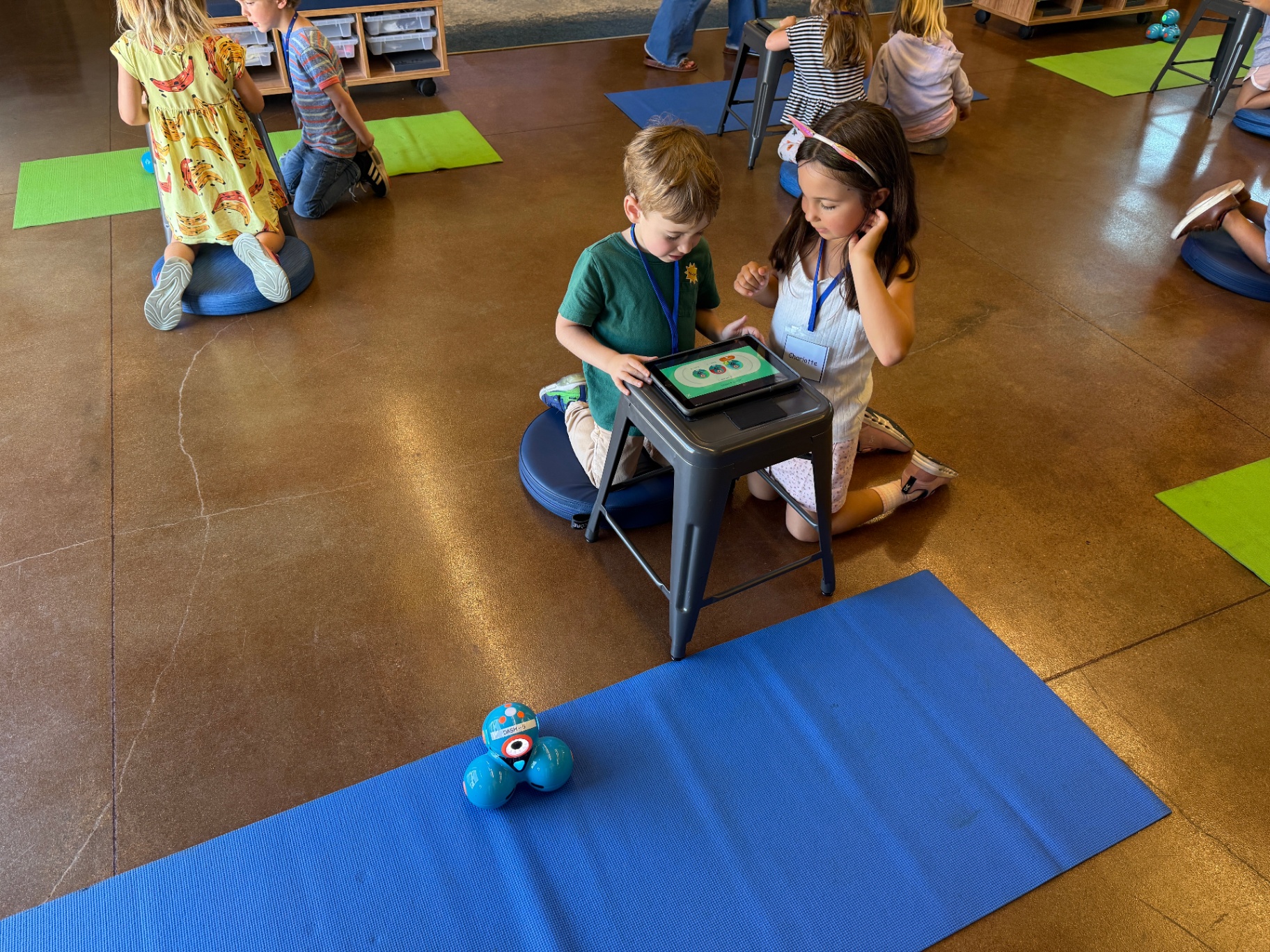
Our youngest engineers use color codes and simple drag-and-drop blocks to guide Ozobots and Dash robots through stories, mazes, and challenges.

Explore Ozobots
Kindergarten students working together on a tablet to program a small blue robot on a blue mat.

Student competencies

  • Sequential thinking
  • Cause and effect
  • Collaborative problem solving

Academic math alignment

  • Position and direction
  • Counting and patterns
  • Basic measurement
Block Coding

Grades 3–6

The Dance Challenge

Students choreograph a robot to move in time with a favorite song — sequencing loops, tuning variables, and debugging together.

Student competencies

  • Algorithmic sequencing
  • Code debugging
  • Variable control

Academic math alignment

  • Ratios & proportions
  • Angle transformations (90°, 180°, 360° turns)
LiDAR Mapping

Grades 4–6

The Campus Delivery

Robots use LiDAR to build a map of our campus, then navigate autonomously to deliver a message to another classroom.

Student competencies

  • Spatial data literacy
  • technology

Academic math alignment

  • Graphing on the coordinate plane
  • Rate, distance, and time (d = rt)
Reactive Sensors

Grades 5–6

The Obstacle Course

Students design an unpredictable course, then teach the robot to sense and safely dodge hazards in real time.

Student competencies

  • Conditional AI logic
  • Digital citizenship
  • Operational safety

Academic math alignment

  • Numerical inequalities (x < threshold)
  • Geometric deflections (angles)

Terms like , , , , , and have short definitions available on hover or tap.

Robots follow. Children lead.

Every module ends with the same conversation: What did you decide? What did the robot decide? Who's responsible? That's how we grow young people who can lead alongside AI, not follow behind it.